Every time your dog trots back in from a walk, it brings a little of New Jersey's outdoor air along for the ride. In April that means tree pollen on the coat. On a hazy July afternoon, it can mean fine smoke particles from wildfires burning hundreds of miles away in Canada. Don't take your indoor air for granted, especially with a dog or cat in the house! Inside, proteins from dander and saliva float into the air you breathe and settle into carpets and the ducts that recirculate them. Before you crack a window, check the live air quality New Jersey readings for your county. Then turn to the part you control: the air inside.
TL;DR Quick Answers
air quality New Jersey
New Jersey measures air quality on the 0 to 500 Air Quality Index. Readings of 0 to 50 are Good, and anything above 100 is unhealthy for sensitive groups. Summer ozone from the New York City and Philadelphia metro areas and Canadian wildfire smoke drive most bad days, and that outdoor air leaks into your home.
Check your county, not the state average: Readings can differ sharply from one county to the next, so look up your local live AQI before heading out.
Check twice in summer: Ozone builds on hot, still afternoons, so a clear morning can still turn Code Orange later in the day.
Get the alerts: NJDEP calls Air Quality Action Days when it forecasts unhealthy air. Its EnviroFlash alerts warn you before the day starts.
Protect the air inside: When the AQI tops 100, close the windows, run your HVAC fan with a MERV 11 to 13 filter, and seal the attic leaks that pull outdoor air in.
Test for radon: The outdoor AQI never measures it, and NJDEP recommends testing every home in the state.
Top Takeaways
Check the outdoor air first. Outdoor air leaks in through windows, doors, and attic gaps.
Blame dander, not fur. Proteins in skin flakes, saliva, and urine trigger the reactions.
Filter smarter. A MERV 11 to 13 filter checked monthly catches far more of what pets shed.
Plan by season. Pollen, ozone, smoke, mold, and radon each peak at a different time of year.
Protect sensitive pets. Birds, seniors, and flat-faced breeds need extra care on Orange days.
What New Jersey's Air Quality Index Means for the Air Inside Your Home
New Jersey reports its outdoor air on the Air Quality Index, which runs from 0 to 500. Good covers 0 to 50 and Moderate covers 51 to 100. Above 100, the air turns unhealthy for sensitive groups first, then for everyone as the number climbs.
Two culprits usually push New Jersey's readings up. Summer ozone drifts in from the New York City and Philadelphia metro areas, and wildfire smoke from Canada has loaded the air with fine particles, called PM2.5, in several recent summers.
Here's something that might surprise you: none of that stays outside. Outdoor air slips in through open windows, gaps under doors, attic bypasses, and leaky return ducts. Once it's in, it mixes with everything your household adds, pets included. If your phone's map leaves you guessing between a live reading and a forecast, this guide on how to read NYC smoke maps sorts it out.
Why Pets Change the Air You Breathe at Home
Pet hair takes the blame, yet the hair itself isn't what makes you sneeze. The allergens are proteins in dander, the tiny flakes of skin pets shed, along with saliva and urine. Fur just carries those proteins from the couch straight to your pillow. The EPA counts animal dander and cat saliva among the biological pollutants that affect indoor air and names children, older adults, and people with breathing problems as the most susceptible.
Dander is only part of what pets bring to your air:
Pollen and lawn treatments that ride in on paws and coats
Fine dust your cat kicks up from clay litter every time it digs
Fragrance chemicals from pet sprays, plug-ins, and odor cover-ups
A heavier load on your HVAC filter, which sends whatever it misses right back into the room
I'd watch that filter most closely. A central air system that filters poorly moves contaminants into every room it serves. A deeper, higher-efficiency option like a 4-inch allergen filter gives dander far more pleated media to land on.
New Jersey's Seasonal Indoor Air Calendar for Pet Owners
Spring: Tree and grass pollen peak right as dogs and cats drop their winter coats. Brush pets and wipe paws outside.
Summer: This is a tough stretch. Ozone Action Days and wildfire smoke push the AQI up, while Jersey humidity invites mold into basements. Walk early, keep windows shut on Orange days, and run a dehumidifier below grade.
Fall: Ragweed and wet leaf litter hi
tch a ride on fur. The first heating cycle stirs up a summer's worth of duct dust, so start the season with a fresh filter.
Winter: Windows stay shut, the air turns dry, and pets spend more of the day indoors. As warm air escapes through attic leaks, the house pulls replacement air in low, including soil gas from the basement. That makes winter the smart time to test for radon.
8 Steps to Cleaner Air in a New Jersey Home With Pets
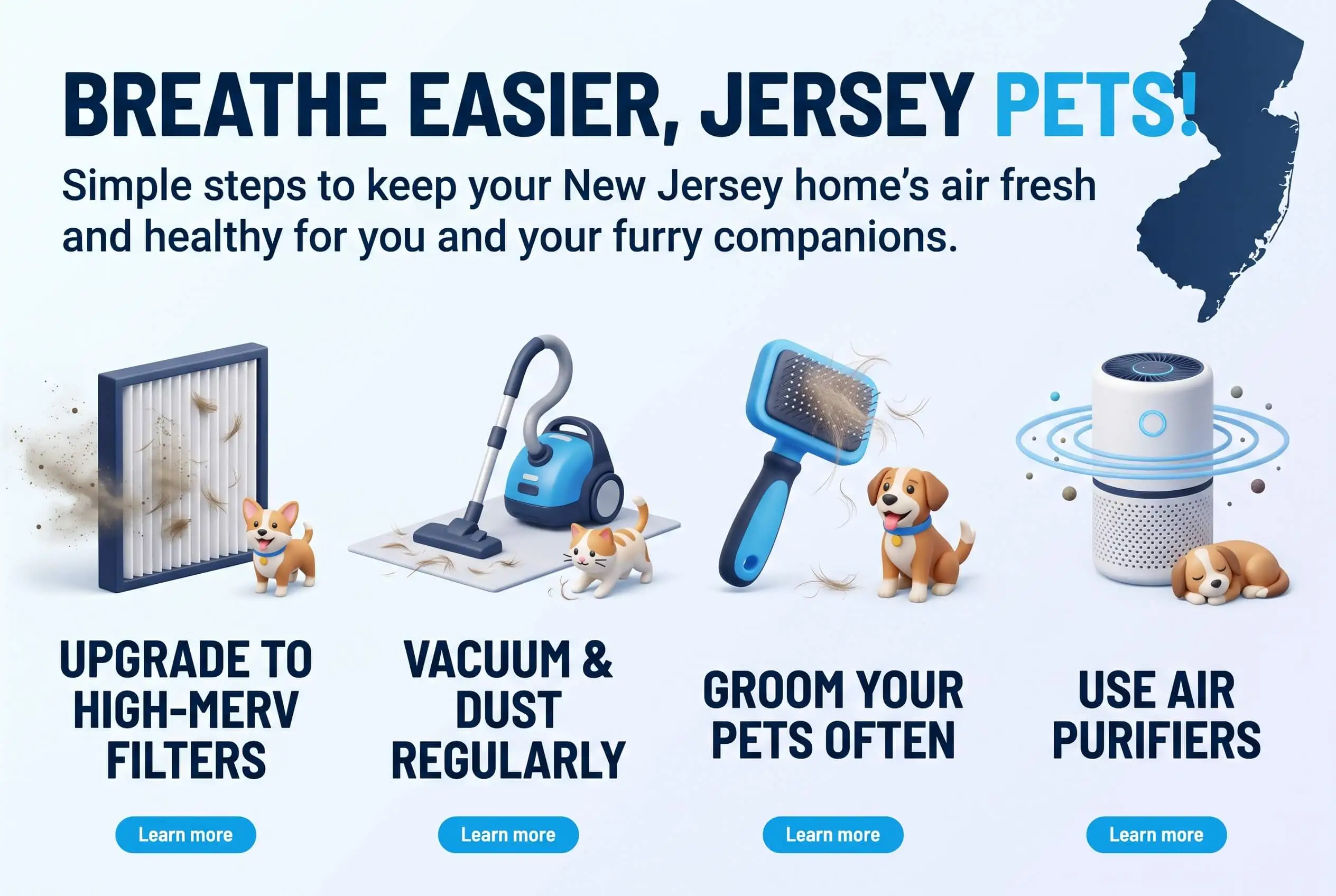
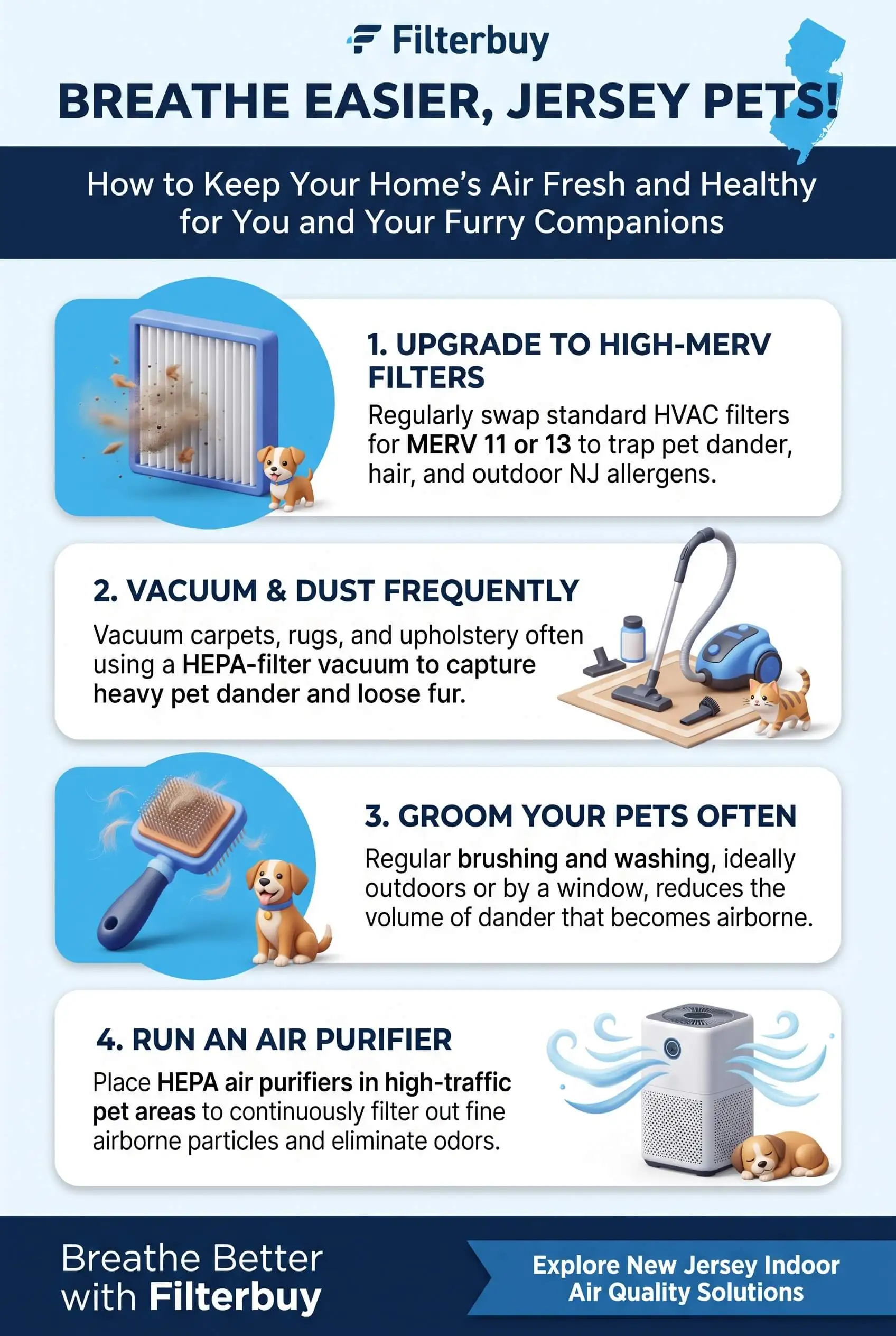
Upgrade your HVAC filter. A MERV 11 to 13 filter traps far more dander and fine particles than a basic filter, as long as your system can handle the airflow. Here's more on pairing MERV 8 filters with a well-insulated home.
Check the filter monthly. Pets load filters fast. I pull mine every month and swap it the moment the pleats turn gray.
Groom outside or in an entry zone. Brush coats and wipe paws before anyone jumps on the furniture.
Vacuum with a sealed HEPA vacuum. Aim for twice a week, and toss pet bedding in a hot wash every week.
Keep humidity between 30 and 50 percent. Damp air feeds mold and dust mites. Dry air irritates airways, yours and your pet's.
Add a portable HEPA purifier. Size it for the room where your pets sleep, since dander builds up there overnight.
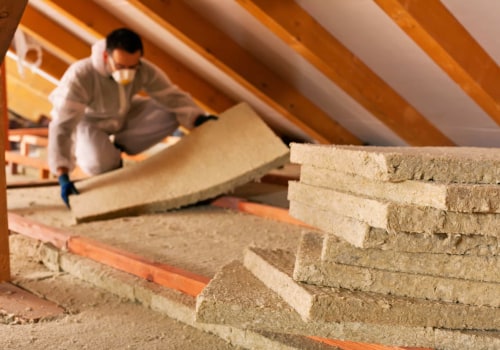
Seal attic bypasses and duct leaks. Gaps around recessed lights, attic hatches, and duct boots let your house pull dusty attic air and outdoor smoke indoors. Seal those first, then choose insulation that's safe to breathe around.
Skip diffusers and heavy fragrance. Essential oil diffusers can cause breathing problems for birds and for pets with respiratory conditions. Air fresheners cover odors without removing a single particle.
Pro Tip: Test for radon even if your town sits in a low-risk tier. NJDEP recommends testing every home. And that pet napping on the finished basement floor? It spends hours right where soil gas comes in.
What to Do When New Jersey's AQI Turns Orange or Worse
A Code Orange day, with readings from 101 to 150, means the air is unhealthy for sensitive groups. Treat senior pets, puppies, flat-faced breeds like pugs, pets with heart or lung disease, and especially birds the way you'd treat a child with asthma.
Keep dogs and cats to quick bathroom trips, early in the morning when ozone runs lowest.
Close the windows and switch your thermostat fan to On so air keeps moving through the filter.
Save fetch and long walks for when the AQI drops under 100.
Sign up for NJDEP's EnviroFlash alerts so you know about an Action Day ahead of time.
Signs Your Indoor Air May Be Bothering Your Pet
Your pet can't tell you the air feels heavy. Its behavior can. Watch for coughing or gagging, labored or open-mouth breathing, watery or irritated eyes, a runny nose, nonstop scratching, or tiredness that seems out of character. Plenty of things cause those symptoms. Call your veterinarian before you blame the air. If they ease after a filter change or improvements to your air conditioner’s filtration, tell your vet.
"In my years servicing homes with pets, the return filter usually tells the story before anyone in the house starts sneezing. In a one-dog home, I'll often find a felted mat of hair and dander across the pleats within a few weeks, and once that mat forms, air slips around the filter edges and carries the dander right back into the ductwork."
7 Essential Resources
Live New Jersey AQI Map by County: Today's county readings, plus what to do on unhealthy air days.
CDC: About Air Quality: How to plan outdoor time around the AQI, with added guidance for anyone with heart or lung conditions.
AVMA: Wildfire Smoke and Animals: Vets explain which pets smoke hits hardest and the warning signs to watch for.
ASPCApro: Are Essential Oils Dangerous to Pets?: Why diffusers are a bad idea around birds and pets with breathing trouble.
AAFA: Pet Allergies: What actually causes pet allergies, and how to manage them without giving up your pet.
American Lung Association: State of the Air, New Jersey: County grades for ozone and particle pollution.
NWS Mount Holly: Air Quality Index Statement: Daily color-coded forecasts for New Jersey regions.
3 Supporting Statistics
Americans spend about 90 percent of their time indoors. Inside, some pollutants often reach concentrations 2 to 5 times higher than typical outdoor levels. Source: EPA Report on the Environment: Indoor Air Quality
Roughly 6 million New Jersey residents live in moderate to high radon risk areas. NJDEP published this estimate as of July 2009. Source: NJDEP: Radon Preventative Measures in New Construction
More than 45 percent of U.S. homes have bedding with dust mite allergen levels linked to developing allergies. Your pet's bed counts too, which is why weekly hot washes matter. Source: NIEHS: Bedroom Dust Contains Unexpectedly High Levels of Allergens
Final Thoughts and Opinion
Here's my honest take. Most New Jersey pet owners worry about the wrong air. We check the AQI on our phones, then walk inside to a clogged filter, an untested basement, and a diffuser puffing away beside the dog bed. The outdoor number matters. Still, a few unglamorous habits do more for your family and pets than any scented candle: a good filter checked monthly, a sealed attic, steady humidity, and a paw-wiping routine at the door. You're the hero of your household here, and the fixes are simpler than they look.
Frequently Asked Questions
What Is a Safe AQI for Walking My Dog in New Jersey?
Under 100, normal walks are generally fine. Once the AQI passes 100, keep outings short and early, and above 150, stick to quick bathroom breaks. Pets with heart or lung disease may need that caution at lower readings.
What Air Filter Is Best for a Home With Pets?
A pleated furnace filter handles dander and fine particles well in most homes. Check your system's specs first, because a filter that chokes airflow makes the blower work harder.
How Often Should I Change My Air Filter With Pets?
Check it every month and replace it once the pleats look gray or matted. Multiple pets or heavy shedding usually mean changing it sooner than the package says.
Do Air Purifiers Help With Pet Dander?
Yes. A true HEPA purifier sized for the room helps most in bedrooms. It works alongside a good HVAC filter and regular vacuuming, not instead of them.
Can Wildfire Smoke Affect My Pets Indoors?
It can. Fine smoke particles work their way in through gaps and vents. Close the windows, run the HVAC fan with a high-efficiency filter, and watch for coughing, watery eyes, or labored breathing.
Breathe Easier at Home With Your Pets in New Jersey
Start with two steps from this guide this week, such as checking your filter and setting up a paw-wiping spot by the door, and you'll notice how much fresher your home feels. Then share your own pet air quality tips in the comments so other New Jersey pet owners can breathe easier too.