TL;DR Quick Answers
top insulation installation near Clermont FL
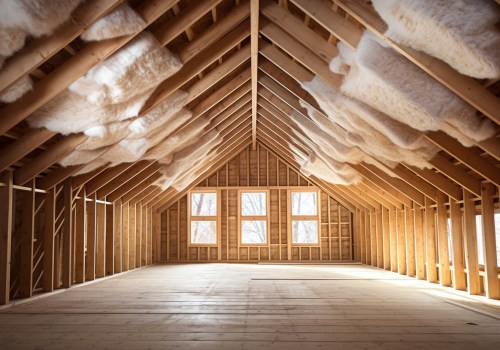
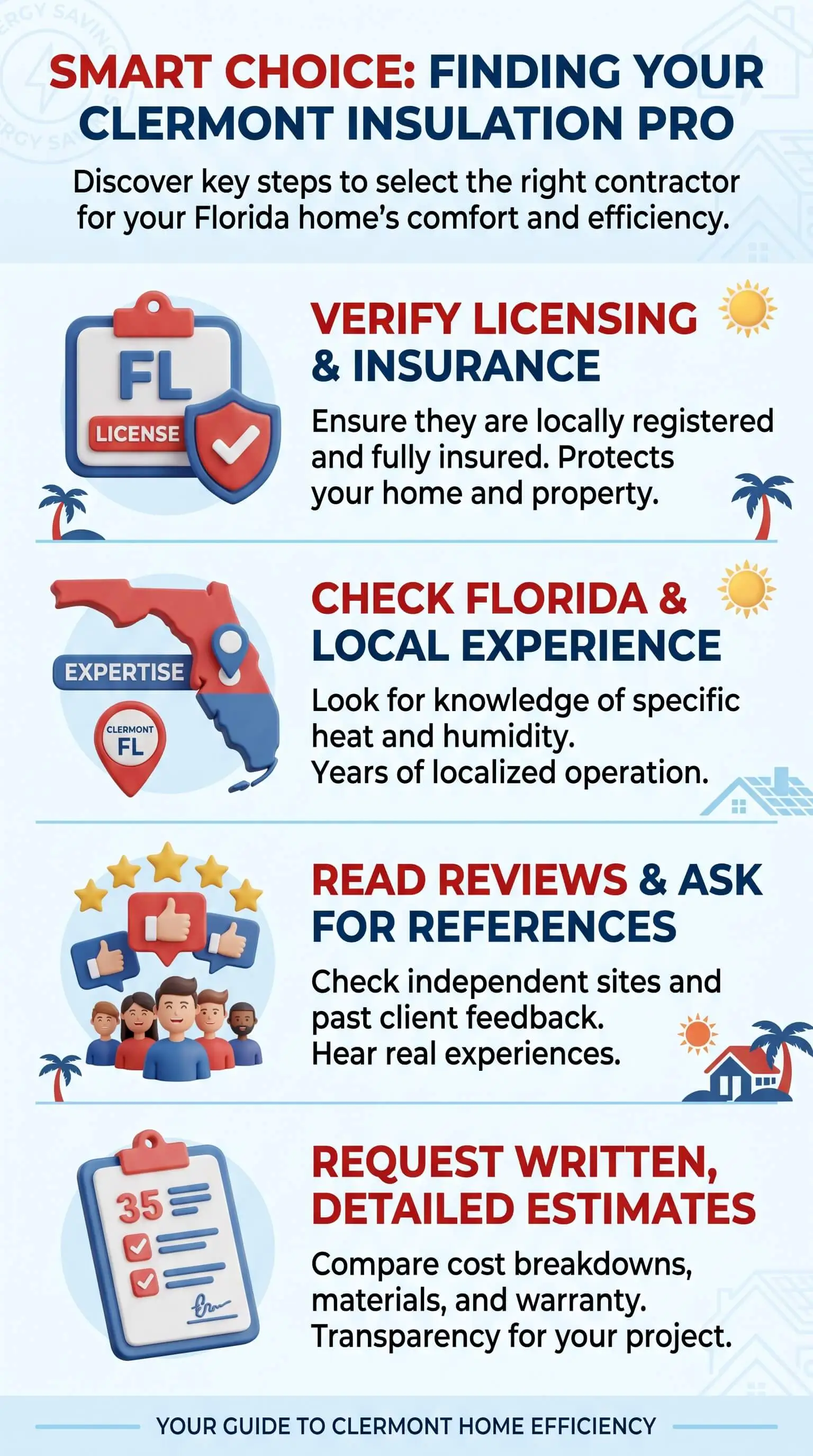
In Clermont, top insulation installation comes down to three things any homeowner should check before signing: the contractor's license must be verified at MyFloridaLicense.com, the quote must specify R-38 (Florida's Climate Zone 2 minimum for attics), and the installed depth in inches plus air sealing scope must appear in writing.
License verified through MyFloridaLicense.com (Florida DBPR)
R-38 specified per Florida Building Code Climate Zone 2
Installed depth listed in inches at the code-required attic depth markers
Air sealing appears as its own line item, with specific points named
Before-and-after attic photos plus certificates of insurance provided on request
Top Takeaways
License verification at MyFloridaLicense.com is the single most important first step, and it takes under two minutes.
Florida code requires R-38 in Clermont attics, and anything lower on a quote is below code.
A real contractor measures the existing R-value before writing the quote, never after the work starts.
The proposed material, total R-value, installed depth in inches, and air sealing scope all need to be on paper before anyone signs.
The lowest bid almost always quietly omits something, and that something is usually the air sealing or the attic prep work.
Verify the License Before Anything Else
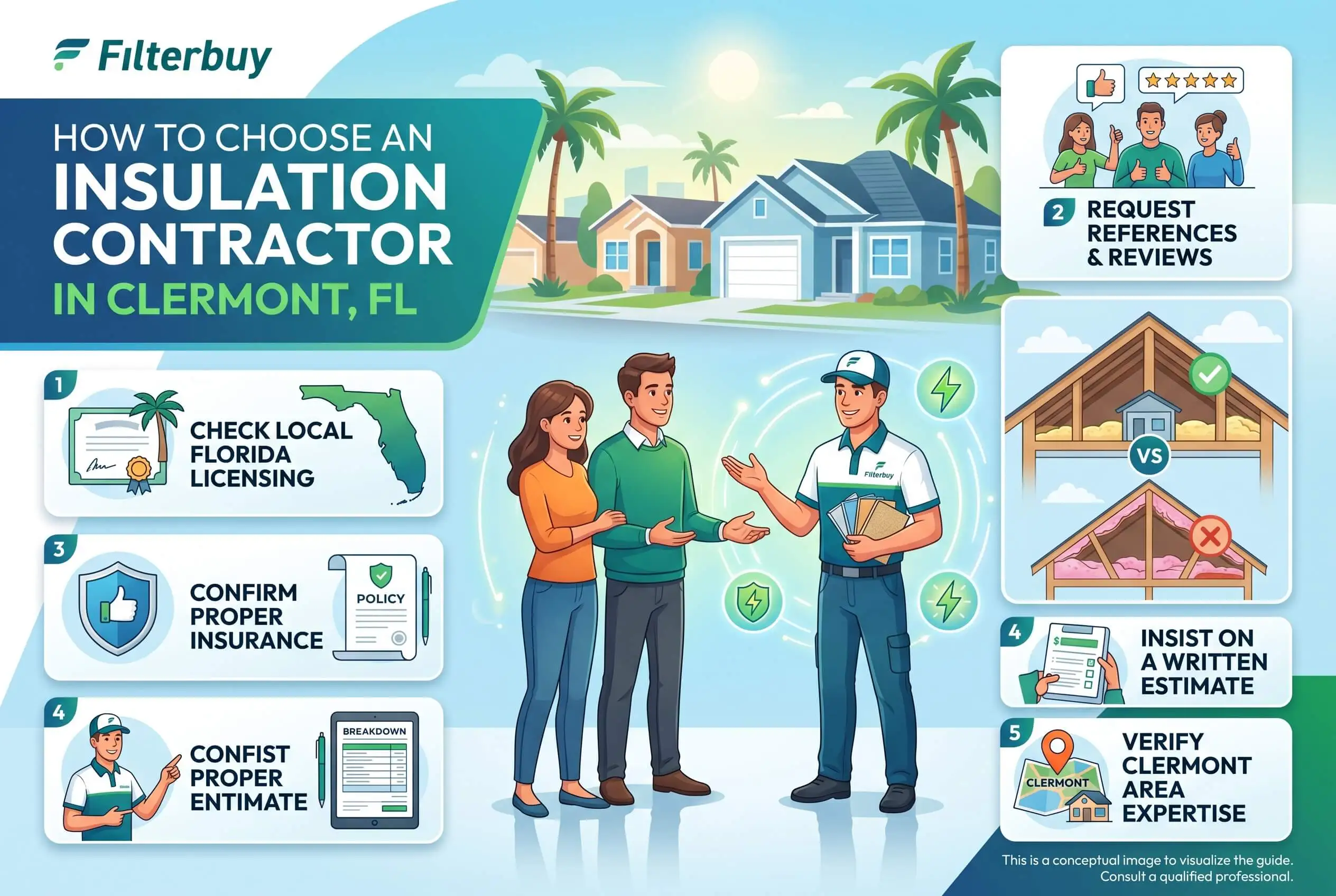
Start at MyFloridaLicense.com. Type in the company name or the license number they gave you. An active record means they're a legitimate Florida DBPR contractor, currently on renewals, and traceable if something goes sideways after the install. If the record comes back blank, or the business name doesn't match what's on the truck and the proposal, that's your cue to walk away.
We've watched neighbors hand over deposits to crews who turned out to be unlicensed subs working under someone else's permit. The two minutes you spend on this lookup are worth more than any other step in the vetting process.
Know Your R-Value Requirement Before You Get a Quote
Clermont sits in IECC Climate Zone 2A under the Florida Building Code. Table R402.1.2 of the Energy Conservation Volume (8th Edition, 2023) puts the minimum at R-38 for our attics. If a quote lists R-30 as the target, that contractor is quoting south Florida code numbers, and the installed work would actually be under what your local jurisdiction requires.
You can spot-check what's up there in about a minute. Open the attic hatch and shine a flashlight across the floor. If the insulation is sitting at or below the top of the ceiling joists, you're well under R-38, and your AC has been working harder than it should be all summer. A professional attic insulation installation service can accurately measure current insulation depth and identify areas where performance has dropped below recommended levels. Twelve to fourteen inches of blown-in fiberglass is roughly what it takes to bring a Central Florida attic up to R-38. Anything less, and you're paying Duke Energy to cool air that bleeds straight into the attic above.
What Should Be in the Written Quote
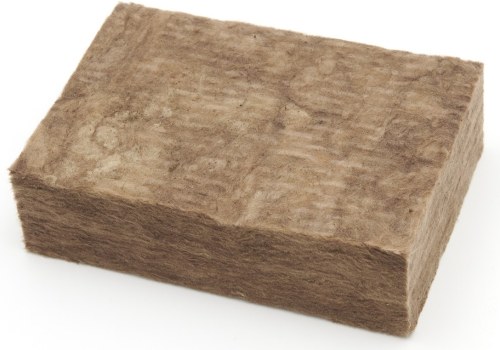
A real quote spells out the exact insulation material by manufacturer and product name, not just “blown-in fiberglass.” It lists the installed R-value and the depth in inches at the rulers. Here's why that matters: Florida code requires the installer to place depth markers across the attic so any future homeowner can verify what's actually up there. Coverage area belongs in square feet, ideally with a simple attic diagram. Air sealing gets its own line item, with the specific points being sealed named explicitly. And the quote should say whether old insulation is being removed and how it's getting disposed of.
When a contractor resists putting any of this in writing, you have your answer.
Questions to Ask Before You Sign
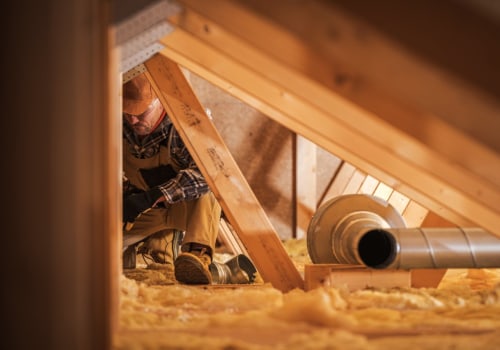
Four questions separate a careful contractor from a sloppy one. Ask them to leave the empty insulation bags on site as proof of how much material actually went down. Ask whether they'll photograph the attic from the same vantage point before and after. Confirm that they carry general liability and workers' comp, and that they can hand you certificates of insurance with your address on them before any work begins. And ask how they're handling existing recessed cans and bath fans, because covering a non-IC-rated can is a fire risk in any Florida attic.
A contractor who's installed insulation correctly hundreds of times across Lake County answers these without thinking twice.
Red Flags That Should End the Conversation
A handful of things should make you politely show a contractor to the door. The clearest one is a door-to-door cold pitch offering same-day work at a “special price.” Quotes that don't list installed R-value and material specifics belong on the list too, along with refusal to leave bag counts or depth-ruler photos. Cash-only pricing is another red flag. So is pressure to pay in full before any work has been done. And a business number that connects only to voicemail, with no real person answering, rounds out the list.
Any one of these is enough on its own.
“In the mid-2000s tract homes we get into across Clermont, original R-19 fiberglass has usually settled to about R-13 after twenty Florida summers. That's the homeowner fighting roughly ten extra degrees of attic radiation on every single cooling cycle, and they almost never know it until somebody measures.”
7 Essential Resources
Here's where we send Clermont homeowners when they want outside sources to back up what we're telling them. Every link below has been verified live.
Building Insulation (Wikipedia). Plain-language foundation on how insulation works, the categories that exist, and the vocabulary you'll need to read a contractor's quote with any confidence.
Recommended Home Insulation R-Values (ENERGY STAR). The federal chart that maps each climate zone to a recommended attic R-value. Clermont is in Climate Zone 2.
Rule Your Attic! (ENERGY STAR). Walk any homeowner through a self-inspection of attic insulation depth and seal quality before they ever call a contractor.
Insulation (U.S. Department of Energy). The DOE's primary residential insulation reference. Covers conduction, convection, and radiation in plain language, and explains where insulation pays back fastest in cooling-dominated climates like ours.
Types of Insulation (U.S. Department of Energy). Side-by-side breakdown of fiberglass, cellulose, spray foam, and radiant barriers. Useful when you're comparing quotes that propose different materials.
Florida DBPR Contractor License Lookup (MyFloridaLicense.com). The state's official license verification tool. Push every contractor you're considering through this before you sign a thing.
Insulation Tax Credit (ENERGY STAR). Current federal Energy Efficient Home Improvement Credit details for insulation expenses, including the annual cap and what qualifies.
These verified resources help Clermont homeowners better understand insulation performance, contractor verification, energy efficiency standards, and federal incentives, making them valuable references for anyone researching the best attic insulation solutions for long-term comfort, lower energy costs, and proper installation practices in Central Florida homes.
3 Statistics
EPA estimates homeowners can save an average of 15% on heating and cooling costs, and roughly 11% on total energy costs, by air sealing the home and adding insulation in attics, floors over crawl spaces, and basements. Source: ENERGY STAR, Rule Your Attic!
Federal tax credit of up to 30% of insulation material costs, capped at $1,200 per year, is available to homeowners under the Energy Efficient Home Improvement Credit. Source: ENERGY STAR, Insulation Tax Credit
Radiant barriers can lower cooling costs by 5% to 10% in warm, sunny climates, particularly when cooling ducts run through the attic, which describes most Central Florida homes. Source: U.S. Department of Energy, Types of Insulation
Final Thoughts and Opinion
Attic insulation done right in Central Florida buys you fifteen to twenty years of meaningful energy savings. Done sloppily, it buys you nothing and leaves the attic exactly as hot as it was before anyone went up there. The deciding factor is almost always the contractor, not the insulation material they pick, even when comparing the different types of attic insulation available for Florida homes. A licensed Lake County crew installing R-38 cellulose carefully will outperform a fly-by-night outfit installing R-49 spray foam sloppily, every single time.
Start with the license check at MyFloridaLicense.com. Push every company you're seriously considering through the lookup before you take their quote at face value. Two minutes of looking will tell you more than any sales pitch will.
 Frequently Asked Questions
How do I verify a Clermont insulation contractor is licensed in Florida?
Run the company name or license number through MyFloridaLicense.com, the state's official Florida DBPR lookup tool. If you see an active record, the contractor is legitimate and current on renewals. If the lookup returns nothing, or the registered business name doesn't match what's on the truck and the proposal, stop the conversation there and look elsewhere.
What R-value of attic insulation does the Florida Building Code require in Clermont?
Clermont sits in IECC Climate Zone 2 under the Florida Building Code Energy Conservation Volume (8th Edition, 2023, Table R402.1.2). For Climate Zone 2, the minimum required attic insulation is R-38. The R-30 figure that floats around in some quotes is a Climate Zone 1 number, which applies to south Florida, not Central Florida.
How much does attic insulation installation typically cost in Clermont, FL?
Pricing depends on the size of your attic, the existing R-value already up there, and whether old insulation needs to be removed and disposed of before the new work goes in. Pull at least two written quotes that itemize installed R-value, material type, depth in inches, and air sealing scope, and then compare them line by line rather than just on bottom-line price. [VERIFY] Operations team to confirm current Clermont pricing range before publication.
How long does an attic insulation installation take in a typical Clermont home?
Most single-family attic jobs in Clermont wrap up in one working day, with arrival, prep, install, and cleanup all happening in a single visit. Larger or trickier attics (multi-level homes, irregular access, or homes where the existing insulation has to come out first) sometimes run into a second day. Either way, you should have a written time estimate in hand before the truck shows up.
Should I have old insulation removed before new insulation is installed?
That depends entirely on what's up there now. Insulation that's dry, intact, and free of any pest or moisture damage can usually be topped with new material to hit the target R-value. Removal is the right call when the existing layer is wet, has been compromised by rodents, or has settled below roughly R-19. A real pre-quote attic inspection should give you a clear written recommendation either way before any money changes hands.
Get an Honest Attic Assessment Before Anyone Quotes Insulation
Choosing the right insulation contractor in Clermont starts with knowing what your attic actually needs and what a fair written scope looks like. Schedule an attic assessment to see where your current R-value stands and what code-compliant work would really involve.
Homeowners researching how to choose an insulation contractor in Clermont FL often focus on insulation quality, but long-term HVAC performance also depends on maintaining proper airflow and filtration after the work is complete. High-efficiency options like 18x25x1 pleated furnace filters, 14x24x1 MERV 13 HVAC air filters, and pleated AC furnace filters can help support cleaner airflow and reduce strain on HVAC systems in homes where attic insulation upgrades are improving energy efficiency. When paired with proper attic sealing and insulation installation, quality filtration becomes part of a more complete strategy for healthier indoor air and more consistent comfort throughout Central Florida homes.